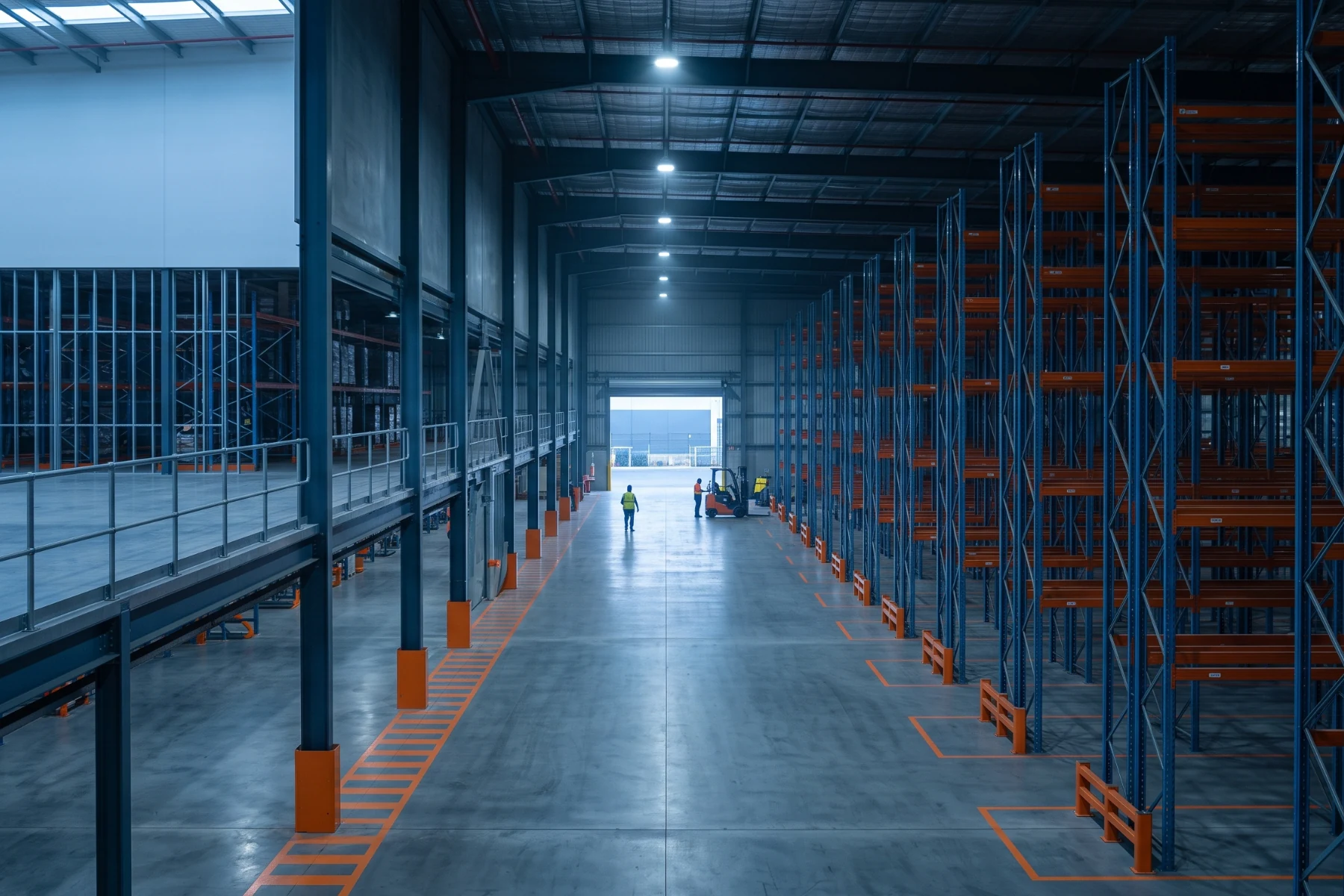
Labour hire places workers on your site who remain employed by the agency, so the agency carries payroll, superannuation and workers compensation while you direct the day-to-day work. In Sydney warehouse and manufacturing settings you are charged an hourly on-charge covering the worker’s award rate, casual loading, superannuation, workers compensation, payroll tax, PPE and the agency’s margin. NSW has no labour hire licensing scheme as at August 2026, unlike Victoria, Queensland, South Australia and the ACT, but you retain full work health and safety duties for anyone working at your site regardless of who employs them. A well-resourced agency with a local pool can usually mobilise a small crew within days, and sometimes the next shift.
4:52am on a Monday. An operations manager in Prestons is standing in a cold despatch bay looking at three no-shows, a truck booked for 7am and a customer who has already escalated once this month.
He does the thing everyone does. He rang the agency that quoted him $1.80 an hour cheaper back in March.
They cannot help. Not because they do not want to, but because at that margin they do not carry a bench, and a bench is the entire product. Six weeks later he had spent the savings back three times over in retraining, overtime and one very awkward call with the customer.
That is labour hire in one paragraph: you are not buying hours. You are buying the ability to not be standing in a despatch bay at 4:52am.
Here is what it actually costs, who is liable when it goes wrong, and how fast people can really be on site.
What is warehouse labour hire, specifically?
Three parties. The agency, the worker, and you.
The agency employs and pays the worker. You direct their work on your site. The commercial relationship is between you and the agency. The employment relationship is between the agency and the worker.
In a Sydney warehouse or manufacturing context that usually means:
- Warehouse. Pickers and packers, storepersons, forklift operators, despatch and receiving, general hands, cleaners.
- Manufacturing and production. Process workers, machine operators, assemblers, production line workers, quality assistants, leading hands.
- Food production. Food production operators, packers, processing and hygiene staff, frequently in chilled or freezer environments.
- Fabrication and trades. Fabrication welders, boilermakers, mechanical fitters, maintenance support.
- Transport and logistics. Freight sorters, container handlers, yard hands, logistics coordinators.
What you are really buying is flexibility of quantity: the ability to move headcount up and down against demand without carrying the fixed cost, the recruitment lead time or the termination exposure.
If you are still at the definitional stage, start with what labour hire is and come back.
What does labour hire cost in Sydney, and what is inside the rate?
Labour hire is charged as an hourly on-charge. The number you are quoted is not a wage. It is a fully burdened cost, and understanding what sits inside it is the single most useful thing you can do before comparing quotes.
A properly costed hourly rate covers:
- The worker’s minimum pay under the applicable award or enterprise agreement, usually the Storage Services and Wholesale Award (MA000084) or the Manufacturing and Associated Industries and Occupations Award (MA000010)
- Casual loading, currently 25% where the worker is engaged as a casual
- Shift loadings and penalty rates for afternoon, night, weekend and public holiday work
- Superannuation
- Workers compensation insurance
- Payroll tax
- Public liability and professional indemnity cover
- PPE and site-specific safety equipment
- Recruitment, screening, licence verification and induction
- Payroll administration, timesheet processing and award interpretation
- The agency’s margin
For context on the base layer: from 1 July 2026 a casual Storeworker Grade 1 under the Storage Services Award is on a minimum of $33.85 an hour on day shift, $37.91 on afternoon and $41.97 on nights, before any of the on-costs above go on top. Sunday ordinary hours for the same classification are $60.93.
The cheap rate maths, and why it never works
Somebody is going to quote you two dollars under everyone else. Here is our honest position: treat that as information about the provider, not a saving.
A rate is low for a reason, and after twenty-odd years we can tell you it is almost always one of four:
- The worker has been classified below the correct award level.
- Shift, weekend and penalty rates have not been properly provisioned.
- Superannuation or workers compensation has been underprovided.
- The margin is so thin the agency cannot afford to hold a bench, which means they cannot replace anyone.
Numbers one to three become your exposure, not theirs, the day an underpayment claim lands or a regulator asks a question. Number four is the one that hurts weekly rather than annually, and it is the reason our operations manager in Prestons was standing in the cold.
Straight up
Two dollars an hour on one worker over a year is roughly four thousand dollars. One unfilled shift on a line that should be running, plus the overtime to catch up and the customer conversation afterwards, will comfortably eat that in a fortnight. Ask for the breakdown line by line. A provider who cannot produce one has told you everything you need.
Who employs, pays and insures the worker?
This is the question employers most often get wrong, and the answer is split down the middle.
The agency is the employer. It holds the employment contract, pays wages and superannuation, holds workers compensation cover, handles PAYG withholding, issues payslips and manages termination.
You are the host, and you control the workplace. Under the model work health and safety laws applied in NSW, both the labour hire provider and the host business owe a duty of care to the worker. That duty cannot be contracted away. If a labour hire worker is injured on your site, the fact that someone else pays them does not discharge your obligation, and no clause in a services agreement changes that.
Your WHS duties as host include:
- Site-specific induction before the worker starts, not on day three
- Providing and requiring correct PPE
- Safe systems of work, plant and equipment
- Verifying that the worker holds any required high risk work licence, such as a forklift (LF) or order-picking forklift (LO) licence, rather than assuming the agency checked
- Supervision appropriate to the worker’s experience with your equipment
- Incident reporting and consultation with the agency
What actually happens
Everyone assumes the other party verified the ticket. The agency assumes the host will check on induction. The host assumes the agency screened it. Nobody looks at the card. Then there is an incident, and the first question the inspector asks is who sighted the licence.
Ask the agency in writing what induction and verification they completed. Keep the email. It costs you thirty seconds and it is the cheapest insurance in this entire article.
If your operation touches road transport at all, whether loading, unloading, scheduling or consigning, Chain of Responsibility duties apply to you too. Agency shortcuts on fatigue, load restraint or speed compliance land on your side of the ledger as well as theirs.
Do you need a labour hire licence in NSW?
As at August 2026, New South Wales has no labour hire licensing scheme. Victoria, Queensland, South Australia and the ACT each operate one, and in those jurisdictions a provider must hold a licence and a host must not engage an unlicensed provider. NSW is working with the Commonwealth and remaining states on a nationally consistent framework, so this may change.
Two practical consequences.
If you operate only in NSW, there is no licence to check. Which means the due diligence falls entirely on you. No regulator is verifying your provider’s workers compensation cover, insurances or award compliance on your behalf. Ask for the evidence and keep it.
If you operate across state borders, the position changes at the border, not at your head office. A provider supplying workers to your Melbourne, Brisbane, Adelaide or Canberra site must hold a licence in that jurisdiction, and a licence in one state does not authorise activity in another. South Australia broadened its scheme from 29 January 2026 to cover all labour hire providers and workers, with a transition period running to 29 July 2026. Check the public registers. They are free and take about a minute.
How fast can workers actually be on site?
Honest ranges, assuming an agency with an established local pool.
Requirement | Realistic mobilisation |
1 to 3 general warehouse or process workers | Next shift to 48 hours |
5 to 10 general workers, same site | 2 to 5 days |
Licensed forklift operators (LF/LO) | 2 to 7 days |
20 or more for a new line or peak season | 2 to 4 weeks with notice |
Trade-qualified (welders, fitters) | 1 to 3 weeks |
The variable is not the agency’s enthusiasm. It is whether they already have screened, inducted, available people in your catchment on your roster pattern. An agency starting from scratch cannot beat these ranges regardless of what it promises in the meeting.
What you can do to compress it: give the roster pattern and site conditions in the first conversation rather than the third, complete your induction requirements in advance, and flag peak season with weeks of notice rather than days. Agencies hold their best available people for clients who brief early. That is not favouritism, it is just how a finite bench works.
Labour hire, temp, or permanent?
Labour hire | Temporary recruitment | Permanent recruitment | |
Employer of the worker | The agency | The agency | You |
Typical duration | Open-ended, flexible | Fixed period or project | Ongoing |
You pay | Hourly on-charge | Hourly on-charge | One-off placement fee |
Headcount flexibility | High: scale up or down weekly | Medium | Low |
Best for | Fluctuating volume, absence cover, peaks | Defined projects, leave cover | Core roles, supervisors, trades |
Most Sydney industrial operations end up running a blend: a permanent core that holds the knowledge, and a labour hire layer that absorbs variability. Getting the ratio right is a strategy question, not a procurement one, and we work through it in temp versus permanent.
The churn problem is usually yours, not the agency's
The most common complaint about labour hire is not cost. It is churn. Different faces every week, constant re-inducting, no accumulated site knowledge.
It is fixable, and four things cause it.
You briefed the job title, not the reality. If the role is a minus-22 freezer on a 5am start with a 40-minute drive, say so before anyone is sent. Every candidate who accepts on incomplete information is a resignation with a delay timer on it.
You did not ask for a named crew. Good agencies can supply the same workers repeatedly rather than whoever is free. Almost nobody asks. Ask, and build it into the arrangement.
You treated the rate as the only lever. Squeeze the on-charge and you squeeze the worker’s pay, and the worker moves to the site paying two dollars more. Stability costs slightly more per hour and dramatically less per year.
You gave no feedback until the invoice. Tell the agency within the first shift if someone is not working out, and equally if someone is. Agencies optimise around the signal they get, and most get none at all until something is disputed.
For ongoing supply into a specific function, warehouse recruitment and manufacturing recruitment run on the same principles, and our full labour hire service covers Sydney’s industrial corridors.
Three moves that keep you out of the despatch bay
Get the rate broken down line by line before you compare anything. If a provider will not or cannot produce it, you have learned what you needed to learn without spending a dollar.
Put your induction and licence verification in writing with the agency. Who checked what, and when. One email. It is the cheapest risk control in this article and almost nobody does it.
Ask for a named crew and give feedback in the first shift. Churn is the thing everyone complains about and almost nobody actually addresses, and these two moves fix most of it.
Our man in Prestons went back to his original provider in May. Same site, same volatility, same 5am starts. He pays about $1.80 an hour more than the cheapest quote in his inbox, and he has not stood in that despatch bay at 4:52am since.
**This article is general information only and is not legal advice. Work health and safety duties, award coverage and labour hire licensing obligations depend on your jurisdiction and circumstances. Impact HR Group is a recruitment agency, not a legal practice, so seek independent advice on your specific situation.
Frequently asked questions
How much does warehouse labour hire cost in Sydney?
Labour hire is charged as an hourly on-charge that covers the worker’s award rate, casual loading, shift and penalty rates, superannuation, workers compensation, payroll tax, insurances, PPE, screening and the agency margin. The base layer alone is significant: from 1 July 2026, a casual Storeworker Grade 1 under the Storage Services and Wholesale Award is on a minimum of $33.85 an hour on day shift and $41.97 on night shift. Always ask for a line-by-line breakdown rather than comparing headline rates.
Who is responsible if a labour hire worker is injured on my site?
Both parties. The agency is the employer and holds workers compensation cover, but under work health and safety law the host business owes its own non-delegable duty of care to anyone working at its site. You are responsible for site induction, safe systems of work, PPE, supervision and verifying high risk work licences. That duty cannot be contracted away.
Do I need a labour hire licence in NSW?
No. As at August 2026 New South Wales has no labour hire licensing scheme. Victoria, Queensland, South Australia and the ACT do, and in those states a host must not engage an unlicensed provider. If you operate across state borders, confirm your provider holds a licence in each relevant jurisdiction, because a licence in one state does not cover another.
How quickly can labour hire workers start?
For one to three general warehouse or process workers, an agency with an established local pool can often supply from the next shift up to 48 hours. Five to ten workers typically takes two to five days, licensed forklift operators two to seven days, and twenty or more for a new line or peak season needs two to four weeks of notice.
What is the difference between labour hire and temp recruitment?
They are close relatives. In both, the agency employs the worker. Labour hire is typically open-ended and used to flex headcount against fluctuating demand, while temporary recruitment is usually tied to a defined period or project such as parental leave cover. The commercial mechanics are similar; the planning horizon is different.
Can labour hire workers become permanent employees?
Yes. Many employers use labour hire as an extended assessment and then offer the worker a direct permanent role. Discuss the transfer terms with your agency at the outset, because most agreements include a transfer fee or a minimum engagement period before conversion.